


3 Things You Need to Know About Live Edge Wood Furniture
- by Muzette Alcocer
-
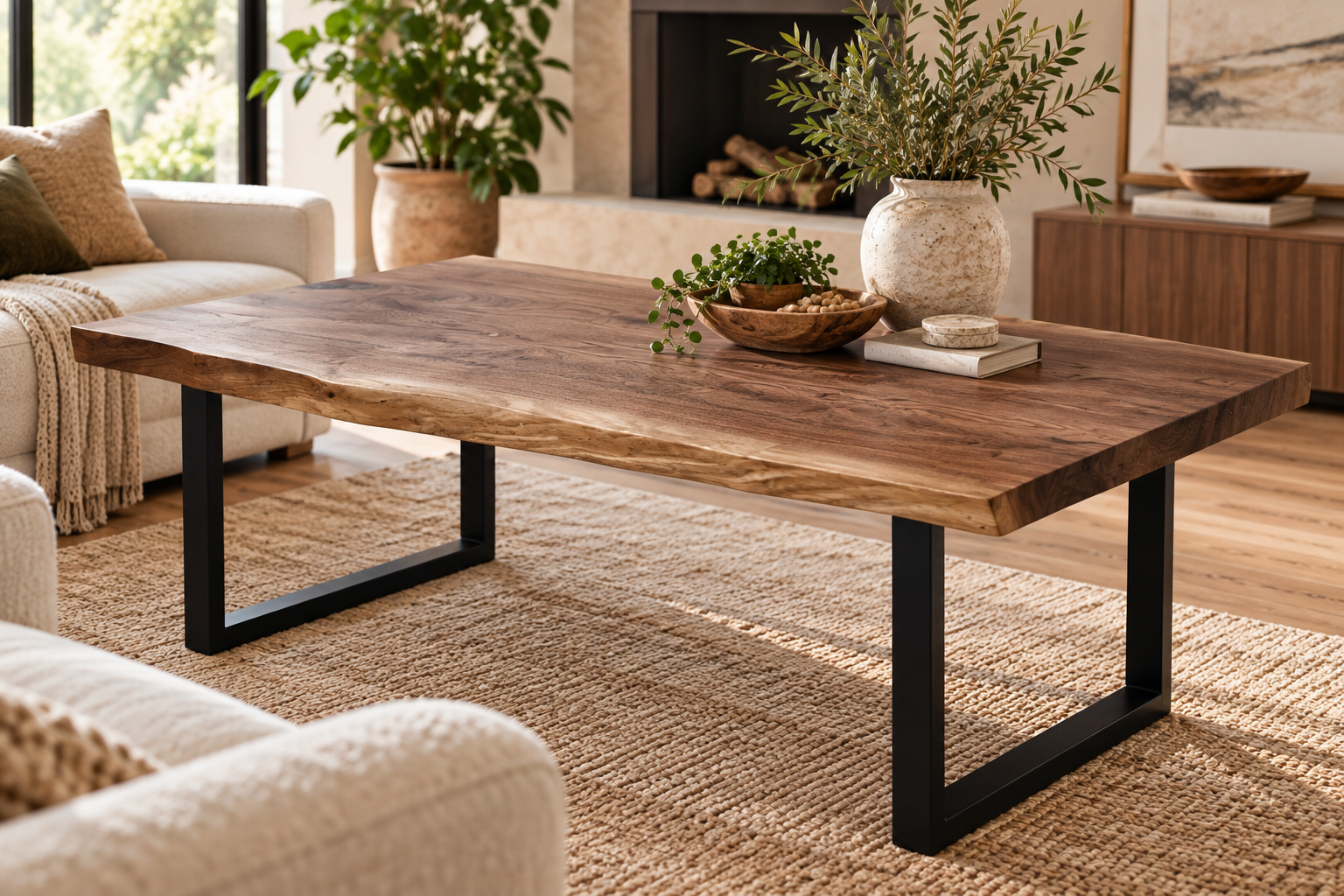
Live edge furniture gets its character from something we don't manufacture: the natural shape of the tree. That means no two pieces will have exactly the same edge, grain, color, or movement—and that's part of what makes live edge furniture different.
It also means there are a few things worth understanding before you order. Why is one live edge dramatically curved while another is fairly straight? Why does walnut sometimes have a much lighter area along the edge? And what does it actually mean when a piece is listed with a depth range instead of a single measurement?
These are questions we hear from customers regularly, so let's break down three things to know about live edge wood furniture and what you can expect from a piece made from real hardwood.

1. A Live Edge Is the Natural Shape of the Tree
Live edge refers to the natural outside edge of the wood. Instead of cutting that edge into a perfectly straight line, we remove the bark and preserve the shape underneath. The curves, dips, and changes along that edge come from the tree itself.
That also means “live edge” doesn't describe one particular shape. Some pieces have a lot of movement, with noticeable curves along the edge. Others may be much straighter with only subtle changes. Both are true live edges.
When you're looking at live edge furniture online, think of the piece in the photograph as an example rather than an exact preview of the edge you'll receive. Your piece will be made from different wood, with its own natural shape and grain. That's one of the reasons two pieces made to the same dimensions can still look noticeably different from each other.

2. Sapwood, Heartwood, and Natural Variation Are Part of the Wood
One of the most noticeable characteristics of live edge walnut is the difference between the darker heartwood and the lighter sapwood. Heartwood comes from the inner portion of the tree and gives Black Walnut much of the rich brown color it's known for. Sapwood is the younger wood closer to the outside of the tree and is naturally much lighter in color.
Because a live edge preserves that outside portion of the wood, you may see more of the lighter sapwood along the natural edge. On some pieces, the change from dark heartwood to light sapwood can be dramatic. On others, it's much more subtle. The amount, shape, and placement will vary from one piece of wood to another.

The same is true of the grain and other natural characteristics in the wood. These variations aren't printed or manufactured into the surface—they're part of the tree itself. That's why the color and grain of your furniture won't be an exact match to another piece, even when they're both made from Black Walnut.
3. Live Edge Furniture Has a Depth Range for a Reason
If you've looked at live edge furniture on our site, you may have noticed that some pieces are listed with a depth range—such as 10–14 inches—instead of one exact depth. That's because a natural edge isn't perfectly straight, so the depth changes at different points along the piece.
For example, a console listed as 10–14 inches deep may measure closer to 10 inches where the live edge curves inward and closer to 14 inches where it extends outward. It isn't a uniformly 14-inch-deep top, and the measurements won't necessarily change evenly from one end to the other. The shape of the wood determines where those variations occur.

The size of that range also affects how much natural movement the edge can have. A wider depth range allows for more variation in the contour of the wood. A narrower range limits how far the edge can move in or out, so the resulting live edge may appear straighter or more subtle.
That's important when you're planning for a specific space. If you're placing a live edge console in a narrow entryway or a desk in an area where every inch matters, use the full listed depth range when measuring. That way, you're allowing room for the natural variation that makes the piece live edge in the first place.
What to Expect From Real Live Edge Furniture
The thing to remember about live edge furniture is that the differences aren't imperfections—they're the reason to choose it. The shape of the edge, the movement in the wood, the contrast between heartwood and sapwood, and the changing depth are all characteristics of working with a natural material.
Knowing what those differences mean makes it easier to choose the right piece for your space and to know what to expect when it arrives. Your furniture won't be an exact copy of the piece you saw in a photograph. It will have its own grain, color, and natural edge shaped by the wood it was made from.
Explore our Live Edge Furniture Collection to see the different ways we use natural-edge hardwood throughout our furniture.