


Custom Wood Bar Top: A Practical Guide to Wood, Size, and Design
- by Robert Reynolds
-
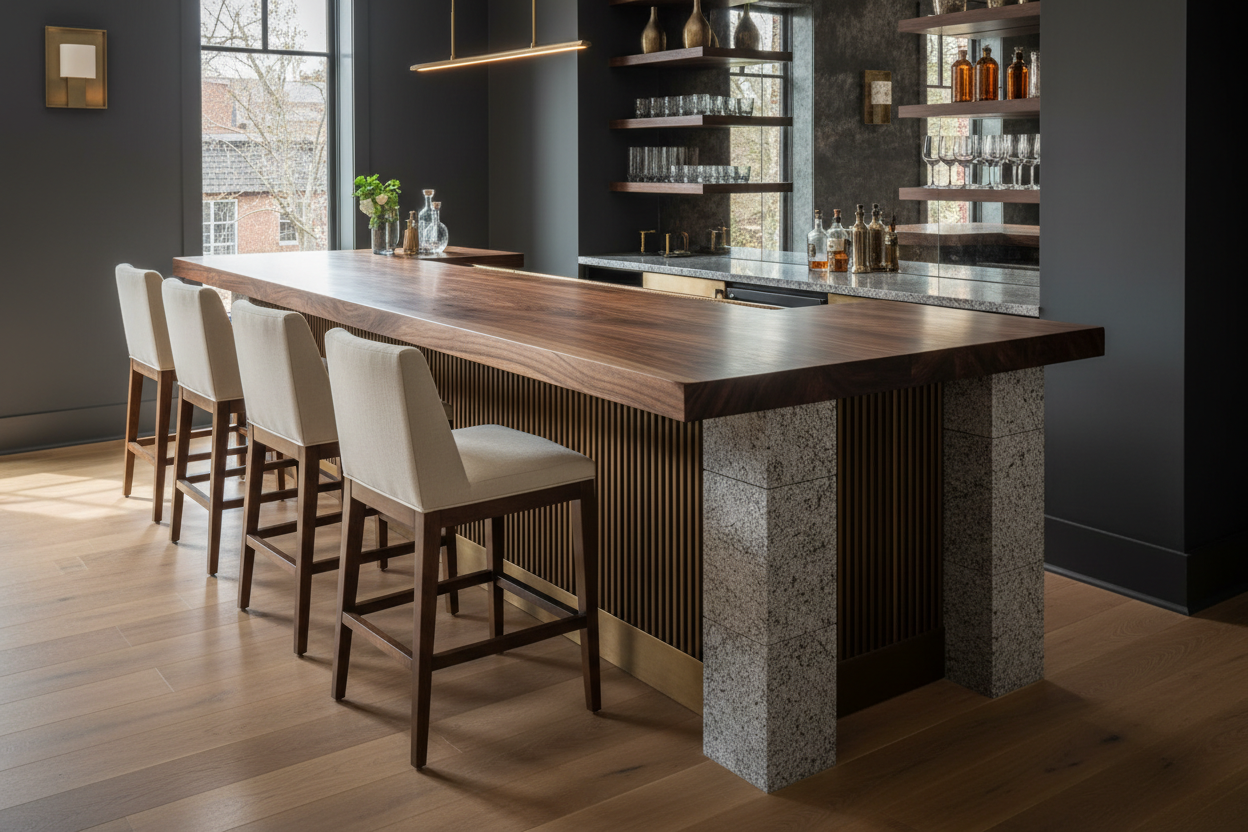
Custom Wood Bar Top: A Practical Guide to Wood, Size, and Design
A bar top has to do more than look beautiful. It needs to fit the room, feel comfortable at the elbow, stand up to everyday use, and work with the cabinetry, stools, lighting, and traffic around it. That is why choosing a custom wood bar top is less about picking a color from a sample and more about making a series of connected design decisions.
This guide walks through the choices that matter most, from hardwood species and proportions to edge profiles, supports, and finish expectations. Whether you are planning a home entertaining space or developing a restaurant bar top design, the goal is the same: a surface that feels intentional, performs well, and lets the natural character of solid wood lead the room.

Why choose a custom wood bar top?
Standard countertops are designed around standard dimensions. Bars rarely are. A custom top can respond to an unusual wall, wrap a column, align with existing millwork, accommodate a service station, or create a comfortable overhang exactly where seating is needed.
Solid wood also brings something manufactured surfaces cannot fully reproduce: variation. Grain direction, color shifts, mineral streaks, knots, and other natural details give each top its own visual rhythm. Thoughtful craftsmanship does not erase that character. It organizes it through board selection, grain matching, joinery, shaping, and careful finishing.
Custom is especially useful when you need:
- A long or unusually shaped counter
- A specific thickness or edge profile
- Cutouts for posts, walls, sinks, taps, or equipment
- A coordinated match with cabinetry, nearby furniture, or a walnut bar table
- Grain and color selected as part of the overall design
- A seating overhang planned around real clearances
Start with how the bar will be used
Before choosing species or finish, define the bar's job. A quiet breakfast counter has different demands from a cocktail station, and a commercial bar top wood selection must account for heavier traffic, repeated cleaning, spills, and service equipment.
Ask who will use the bar, how often, and for what. Will guests eat full meals or set down occasional drinks? Will staff work behind it? Does it need plumbing or electrical access? Will sunlight hit the surface for hours each day? These answers shape every decision that follows.
Useful planning dimensions
Measurements should always be checked against the actual room, cabinetry, stools, equipment, local requirements, and the fabricator's engineering guidance. As an early planning reference, many residential bar counters are around 42 inches high, while counter-height seating is commonly paired with a surface around 36 inches high. A comfortable seat usually needs roughly 24 inches of horizontal width per person.
Seating overhangs often fall near 10 to 12 inches, but the right depth depends on stool height, knee room, top thickness, support method, and the people using it. A deeper overhang may feel more comfortable, but it also increases leverage and can require visible or concealed support. Never treat the overhang as a styling decision alone.
Choose seating early, not after the top is finalized. Reviewing the dimensions of pieces such as ArtisanBorn's walnut bar stools can help you coordinate seat height, width, back clearance, and spacing before fabrication.

Choosing the right hardwood
The best species is not simply the hardest or darkest. It is the wood whose appearance, natural variation, and aging characteristics suit the space and the way you plan to live with it.
Black walnut
A walnut bar counter creates a strong focal point without needing an elaborate shape. Black walnut is known for rich brown color, flowing grain, and occasional lighter sapwood. It works especially well with warm metals, soft neutral upholstery, painted cabinetry, and stone floors. Because walnut can vary from board to board, decide whether you prefer a more uniform composition or one that celebrates contrast.
White oak
White oak offers a lighter, grounded look with pronounced grain. It can feel traditional, modern, or quietly architectural depending on board selection and edge treatment. Its visual texture pairs naturally with plaster, brick, dark steel, and simple cabinetry, making it a versatile choice for both homes and hospitality settings.
Maple
Maple is typically pale and fine-grained, so it suits interiors that need warmth without a dark visual anchor. It can be an effective counterpoint to colorful cabinetry or a clean extension of a neutral kitchen. Its subtle figure also puts more attention on proportion and craftsmanship.
Other species
Other American hardwoods may be appropriate when their color, grain, availability, and working characteristics fit the project. Instead of selecting from a small sample alone, discuss how the species looks across a full-size surface and how much natural variation you want to see.

Solid wood bar slab or built-up top?
The phrase solid wood bar slab can describe different constructions, so clarify what you are buying. A single natural slab offers dramatic grain and an irregular live edge when that is part of the design. A carefully composed top made from multiple solid-wood boards can provide a more controlled shape, width, grain sequence, and edge profile.
Neither approach is automatically better. The right one depends on the visual goal, required dimensions, available material, support plan, and desired level of natural irregularity. Ask to understand the construction rather than relying on a label.
Five steps to a better bar top design
- Map the room. Record wall lengths, cabinet dimensions, door swings, walkways, posts, outlets, plumbing, and nearby furniture. Check corners for square rather than assuming they are.
- Set the working height. Choose bar height or counter height based on seating and use. Confirm stool seat height before finalizing the top.
- Define depth and overhang. Allow enough room for place settings, equipment, and knees while preserving comfortable circulation.
- Plan seams, grain, and edges. On a long run or L-shaped bar, decide where joints can fall gracefully. Choose whether the edge should appear crisp, softly eased, rounded, or more sculptural.
- Coordinate supports and installation. Brackets, corbels, cabinetry, steel supports, and attachment points should be resolved before fabrication. Wood naturally responds to changes in its environment, so the attachment method should follow the maker's guidance.
Restaurant bar top design considerations
In a commercial setting, beauty has to coexist with workflow. Begin with the staff side: glass storage, sinks, taps, rails, point-of-sale equipment, service paths, and cleaning access. Then shape the guest side around comfort, reach, lighting, and the pace of the room.
A successful restaurant bar top design often uses repetition to make a long counter feel composed. Stool spacing, pendant locations, vertical panel lines, and grain direction can create order. If the bar turns a corner, the joint and grain transition should look deliberate from the guest's viewpoint.
- Keep heavily used work zones easy to access and clean.
- Confirm clearances with every piece of installed equipment.
- Choose details that can tolerate repeated contact without looking fussy.
- Use samples to review wood color under the project's actual lighting.
- Resolve accessibility and applicable code requirements with qualified project professionals.

Edge profiles, thickness, and visual weight
Thickness changes how a bar feels before anyone touches it. A substantial profile can anchor a large room, while a slimmer edge may suit refined cabinetry and a lighter interior. The visible edge does not always tell you the full construction, so discuss the desired appearance and the structural plan separately.
A lightly eased edge is comfortable and lets the grain remain the focus. A rounded profile feels softer and can suit a family space. More sculpted edges make a stronger statement but should be considered alongside cleaning, wear, and the style of the room.
Finish and everyday care
A bar finish should be chosen around use, appearance, and realistic maintenance expectations. No finish makes wood entirely immune to standing water, heat, abrasion, or harsh chemicals. Ask the maker which cleaners are appropriate and how the surface can be refreshed if wear develops.
Good everyday habits are simple:
- Wipe spills promptly, especially around sinks and drink-prep areas.
- Use trivets or protective mats under hot equipment.
- Avoid leaving wet towels, rubber mats, or metal containers on the surface.
- Use coasters when practical and clean with the recommended products.
- Maintain stable indoor conditions as much as possible.
Common mistakes to avoid
- Choosing wood from color alone. Grain scale and variation can matter as much as the overall tone.
- Finalizing stools too late. Seat height, width, arms, and swivel clearance affect the bar dimensions.
- Ignoring support. An attractive overhang still needs a sound structural plan.
- Forgetting field conditions. Walls may bow, corners may be out of square, and trim can change the fit.
- Overlooking lighting. Warm and cool light can alter how wood color reads throughout the day.
- Expecting perfect uniformity. Natural variation is part of solid wood, not a manufacturing defect to design away.
- Planning only the guest side. In commercial projects, staff workflow determines whether the bar works under pressure.
How to prepare for a custom quote or design conversation
A clear starting package helps the maker understand both the dimensions and the intent of the project. Gather:
- A simple plan with overall length, depth, height, and overhang
- Photos of the room and supporting cabinetry
- Locations of walls, columns, cutouts, seams, and equipment
- Your preferred species and examples of wood character you like
- Inspiration images for edge shape and overall style
- The installation timeline and who will measure and install
For complex shapes, templates and final field measurements may be more useful than a sketch alone. Confirm the maker's preferred process before cabinetry or supporting structures are locked in.
A bar top designed for the way you gather
The best custom wood bar top balances natural character with disciplined planning. Species, dimensions, grain, edge profile, support, and finish all contribute to how the surface looks on day one and how comfortably it serves the room over time.
For a closer look at how solid walnut, proportion, and craftsmanship come together at bar height, explore the Solid Walnut Bar Table. To discuss your own space, give us a call at 800-674-0616 Mon–Fri or chat with us anytime!