


Solid Wood Dining Table Size Guide: Dimensions, Seating & Clearance
- by Muzette Alcocer
-
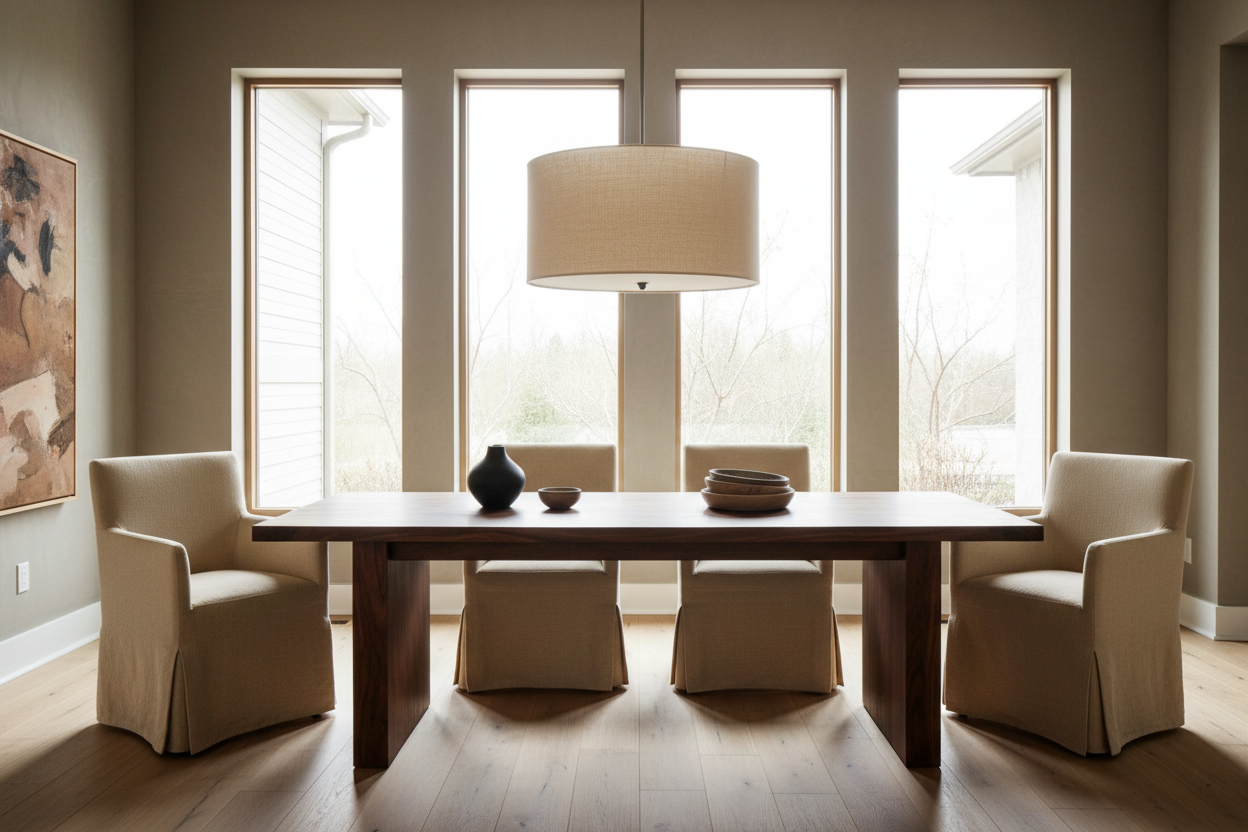
Choosing the right dining table is less about filling the room and more about making everyday life feel easy. The best table leaves enough space to sit comfortably, pull out a chair, serve a meal, and move through the room without bumping into walls or furniture.
This solid wood dining table size guide breaks down the measurements that matter most, from tabletop dimensions and seating capacity to dining table clearance rules. You’ll also find practical advice for choosing a custom hardwood dining table in a wood species and shape that suit your home.

The quick answer: how big should a dining table be?
Begin with the number of people you seat most often, then allow roughly 24 inches of table edge per person for comfortable place settings. About 22 inches can work in a tighter arrangement, while 28 to 30 inches feels generous for long dinners, wide chairs, or a more relaxed designer look.
For the room itself, plan for at least 36 inches between the table edge and the nearest wall or furniture. If people will regularly walk behind seated guests, 42 to 48 inches is a better target. Measure the complete footprint, including chairs pulled back from the table, not just the tabletop.
- Four people: usually 48 to 60 inches long for a rectangular table, or 42 to 48 inches round.
- Six people: usually about 72 inches long, or 60 inches round.
- Eight people: usually 84 to 96 inches long, or 72 inches round.
- Ten people: usually 108 to 120 inches long, depending on chair width and leg placement.
Those are starting points rather than rigid rules. The final choice depends on the table’s width, base design, edge shape, chair dimensions, and how much space you want at the ends.
Solid wood table dimensions by seating capacity
Length determines how many people fit along the sides, while width determines how comfortable the table feels for serving dishes, place settings, and conversation. For most dining rooms, 36 to 42 inches wide is a practical range. A 48-inch-wide table can feel beautifully substantial, but it needs a larger room and a little more reach across the center.
Rectangular dining table size guide
- 48 to 60 inches long: four people comfortably, or six with narrower chairs and seating at both ends.
- 72 inches long: six people comfortably, with two on each side and one at each end.
- 84 to 96 inches long: eight people comfortably, especially at 40 to 42 inches wide.
- 108 to 120 inches long: eight to ten people with generous spacing, or ten to twelve in a more social, closely arranged setting.
- 144 inches long: a large gathering table for ten to twelve or more, provided the room and circulation support it.
These solid wood table dimensions assume ordinary dining chairs rather than oversized armchairs. If you plan to use substantial upholstered chairs, allow more edge space per person. Also check where the legs or pedestal land. A table can have enough length on paper but still feel cramped if a leg occupies the best seating position.
Round and square dining table dimensions
- 42 to 48 inches round: four people.
- 54 to 60 inches round: four to six people, depending on chair width and the amount of serving space you want.
- 72 inches round: eight people in a room that can accommodate the larger footprint.
- 36 to 42 inches square: four people.
- 48 to 60 inches square: four to eight people, with the larger sizes best suited to broad rooms and generous clearance.
Round tables make conversation easy and soften a room with strong architectural lines. Rectangular tables are usually more efficient in long rooms and work well when you need to seat more people without expanding the circulation zone in every direction.

If that layout works best for your room, a solid hardwood dining table with U-shape legs offers the clean rectangular footprint discussed above.
Dining table clearance rules that prevent a cramped room
Good clearance is what makes a beautiful dining room work in real life. Use the table edge as your starting line, then measure outward to walls, islands, sideboards, door swings, and other furniture.
- 36 inches minimum: A good minimum between the table edge and a wall or stationary furniture when the route is not heavily used.
- 42 inches comfortable: Gives chairs more room to pull out and makes it easier to move around the table.
- 48 inches or more: Worth considering where a main walkway, doorway, or high-traffic path runs behind the seating.
- Leave door and drawer clearance: sideboards, cabinets, and nearby doors need their own operating space in addition to chair clearance.
- Measure with the chairs pulled out: a dining chair can add roughly 18 to 24 inches beyond the tabletop, depending on its depth and how people sit.
In a compact dining area, it is usually better to choose a slightly shorter table with comfortable clearance than a larger table that forces every chair against a wall. If you host occasionally, consider an extendable design only when the room can support the expanded footprint without sacrificing the everyday path through the space.

Plan the table, chairs, and circulation as one footprint rather than measuring the tabletop alone.
How to choose a custom hardwood dining table
A custom hardwood dining table becomes much easier to specify when you make the decisions in the right order. Start with the room, then move toward the details that express your style.
- Measure the room and mark the usable zone. Note walls, door swings, islands, windows, radiators, and any route people use to cross the room. Use painter’s tape or a paper template to test the footprint on the floor.
- Choose the everyday seating count. Design for the number of people you seat most weeks, not the largest gathering of the year. Occasional guests can be handled with extra chairs when the room allows.
- Select the shape. Rectangular tables suit long rooms and larger groups. Round tables improve flow in square rooms and make smaller gatherings feel more connected. A square table can anchor a centered dining area but needs balanced clearance on all four sides.
- Choose the wood character. A solid walnut dining table brings visual depth, rich color, and distinctive grain, while white oak tends to feel lighter and more architectural. Maple offers a clean, understated look. Consider not only which wood you love on its own, but how it will work with your flooring, cabinetry, and other furniture.
- Review the base and seating positions. Pedestals can free up legroom, while trestles and corner legs create a different visual rhythm. Confirm that the base does not interfere with the chairs you plan to use.

A custom hardwood dining table should be proportioned to the room first, then refined through species, edge, and base choices.
Common dining table sizing mistakes to avoid
- Measuring only the tabletop: the true footprint includes chairs, circulation, and the space needed to pull a chair back.
- Choosing length without width: a long, narrow table may seat the right number but leave little room for serving pieces or comfortable place settings.
- Ignoring the base: leg placement can reduce usable seats even when the tabletop dimensions look correct.
- Planning for a rare event: a table that dominates the room every day may not be worth the extra seats used twice a year.
- Using oversized chairs without recalculating: armchairs and deep upholstered seats require more edge space and clearance.
- Forgetting visual weight: dark walnut, thick tops, and substantial bases can make a table feel larger than its measurements suggest. Balance them with open space and lighter surrounding elements.
Styling a solid wood dining table
Solid wood already supplies texture and visual interest, so styling works best when it supports rather than hides the material. Keep centerpieces low enough for conversation, use natural textiles to soften the setting, and let a portion of the tabletop remain visible. A restrained arrangement of ceramics, glass, or branches can echo the organic character of the grain without competing with it.
For a warm, collected room, pair walnut with cream, clay, olive, or muted blue. For a lighter look, white oak works beautifully with linen, soft black accents, warm whites, and woven textures. The goal is not to make every piece match. It is to give the table enough breathing room to look intentional. If you’re still deciding which wood best suits your space, our Walnut vs. White Oak Furniture: Which One Fits Your Home? guide takes a closer look at the character and look of each.
Final checklist before you order
- Measure the room’s usable dining zone, including doors and walkways.
- Mark the proposed table size on the floor with tape or a paper template.
- Confirm at least 36 inches of clearance, and aim for 42 to 48 inches on active walkways.
- Allow about 24 inches of table edge per person for comfortable seating.
- Check chair width, chair depth, armrests, and the table base together.
- Choose a wood species, shape, and finish that support the room’s architecture and daily use.
Find the right solid wood dining table for your room
The best table is the one that makes the room feel naturally proportioned: comfortable when the family gathers, generous when friends arrive, and visually strong even when it is not set for dinner. Use this solid wood dining table size guide to establish the dimensions first, then choose the wood character and craftsmanship that make the piece feel like it belongs in your home.
Explore Artisan Born’s solid wood dining tables to find the size, wood species, and style that works for your space. If you’re planning a particular room or need help thinking through dimensions, contact the Artisan Born team with your measurements and seating goals.