


Live Edge Furniture Ideas: How to Use Natural Wood in a Modern Home
- by Muzette Alcocer
-
Live Edge Furniture Ideas: How to Use Natural Wood in a Modern Home
Live edge furniture often gets filed under “rustic.” You picture a large slab, a cabin, perhaps a room full of matching wood. But the natural edge is only one part of the design. The species, silhouette, base, surrounding materials, color palette, lighting, and even what you place on top all shape how a piece feels in a room.
A live edge can look quietly at home beside a tailored sofa, clean-lined cabinetry, or a modern desk chair. It can add warmth to a minimal space without changing the whole room’s direction. If you like the character of natural wood but want your home to feel current rather than rustic, these live edge furniture ideas are a place to start.
What Makes Live Edge Furniture Different?
A live edge follows a natural contour of the wood instead of cutting every visible edge into a perfectly straight line. That contour, along with the grain and other visible characteristics of the wood, means individual pieces can differ. It doesn’t mean every side of the furniture must be irregular: a piece can combine a live edge with straight, deliberate lines.
Here, we’ll focus on what happens after you’ve decided you like the look: finding the right place for it and making it feel like part of your home.
Live Edge Furniture Doesn’t Have to Look Rustic
The easiest way to change the feel of live edge wood furniture is to look beyond the edge. A simple silhouette lets the wood provide movement while the rest of the piece stays composed. Metal legs can give a table a more contemporary or industrial note; a cleaner base and restrained styling can make that same natural contour feel subtle rather than rugged.
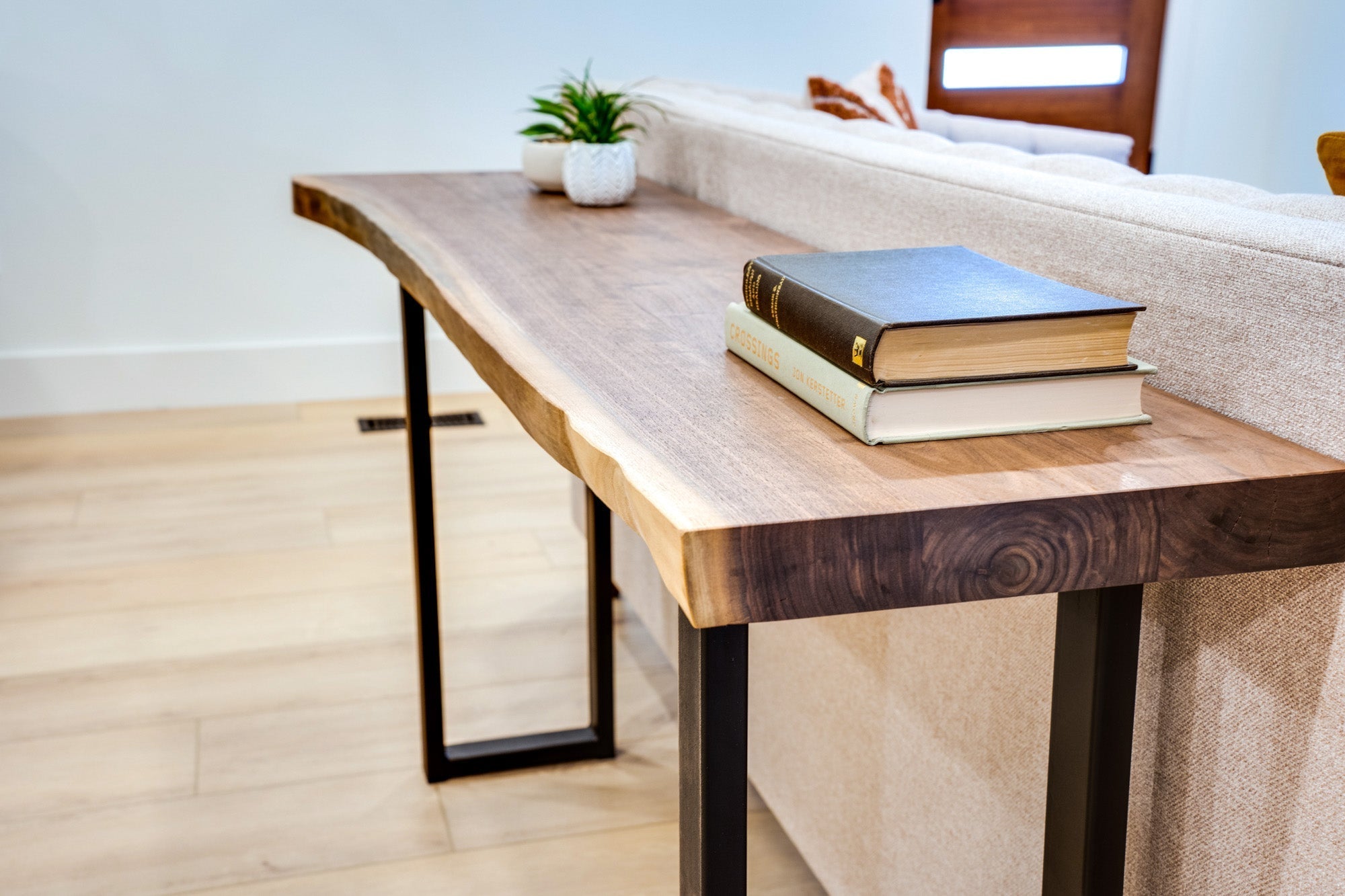
Live edge furniture works especially well when you let the wood be the interesting part. Against a simple wall, clean-lined sofa, or modern cabinetry, the natural edge adds warmth without making the room feel rustic. Walnut can bring depth to a lighter room, while metal legs keep the overall look clean and modern.
You also don't need to redesign the room around it. Live edge can work with furniture you already own, whether that's an upholstered chair, a favorite rug, or a mix of wood and metal. The goal isn't to match everything. Give the piece enough room to stand out without asking it to become the theme of the entire room.
None of these combinations is a formula. The point is that a natural edge doesn’t assign a style to a room on its own. Everything around it helps set the tone.
Live Edge Furniture Ideas for Different Rooms
A Live Edge Desk for a Modern Home Office
Home offices tend to collect straight lines: screens, shelves, cabinets, and the edges of the room itself. A live edge desk introduces a different shape without asking the workspace to give up its practical purpose.
The Live Edge Walnut Narrow Desk pairs a natural walnut edge with choices of Hairpin or U-shape legs. Its listed depth varies with the wood, which is worth keeping in mind when you plan what needs to fit on the work surface. Against a plain wall, the edge and grain can supply the visual interest; a simple lamp and a chair that suits the room may be all the styling it needs.

If an adjustable workstation is the priority, Artisan Born also has a live edge walnut standing desk with a motorized frame. Let the function guide the choice first, then consider how much natural-edge character you want to see in the office.
A Live Edge Console for an Entryway or Living Room
An entryway is a good place for a piece with character because you often encounter it on its own, rather than in the middle of a furniture grouping. A console can sit beneath a mirror or artwork, hold the things you reach for on the way out, and give an otherwise empty wall a purpose.
The Custom-Made Live Edge Walnut Console Table offers length choices, Narrow or Wide depth ranges, and Hairpin or U-shape leg options. Those depth choices make it useful to think about where the console will sit: an entry passage needs different clearance from an open living-room wall. The product describes its depth as a range because the natural edge varies, so plan with that variation in mind rather than treating the top like a perfectly uniform rectangle.
A console can also work behind a sofa, where its long horizontal form echoes the furniture’s lines while its edge introduces a little movement. Keep the objects on top selective so you can still see the wood.
Live Edge Floating Shelves for a Smaller Touch of Natural Wood
You don’t have to start with a large table. A shelf lets you use a natural edge at a smaller scale, especially in a room that already has its main furniture in place.
The Live Edge Walnut Floating Shelf is made from a solid walnut live-edge slab and comes in multiple listed lengths and depths. Its product description notes that natural-edge shelves will not look exactly alike. That variation can be a feature when the rest of the wall is simple: books, one ceramic object, and a little open space may show the shelf more clearly than a tightly packed display.

Consider a shelf above a reading spot or on a wall that needs warmth but not another floor-standing piece. It brings natural-edge character into the room without making it the dominant furniture feature.
A Live Edge Coffee Table as a Natural Focal Point
A coffee table sits among some of a living room’s strongest shapes: the sofa, chairs, rug, and sometimes a fireplace or media cabinet. That makes it an interesting place to balance organic and geometric lines.
Artisan Born’s Live Edge Solid Walnut Coffee Table makes the relationship especially clear: its current description specifies one straight edge and one live edge. If you like natural variation but want a composed look, that mix can feel more restrained than a table with natural contours on both sides. The product offers dimension and Hairpin or U-shape leg choices, so consider the table’s proportions alongside your seating rather than choosing by edge shape alone.
Let the top remain visible. A small tray can gather the objects you actually use, while leaving enough uncovered wood for the grain and contour to do their work.
Smaller and Unexpected Ways to Use Live Edge
A bench can introduce live edge furniture where you may not have thought to use a table. Artisan Born’s live edge walnut bedroom bench, for example, is described for an entryway, seating area, or the foot of a bed. In a bedroom with a neatly upholstered headboard and simple bedding, its variable natural contour can add contrast without requiring another wood piece to match it.
An end table offers an even more subtle way to introduce live edge. Beside a clean-lined sofa or chair, a live edge top can be the one irregular shape in an otherwise orderly corner. Start with the room’s actual need, somewhere to sit, set down a cup, or keep a book close, and let the wood character be the added pleasure.
Live Edge vs. Straight Edge Furniture
Choosing between live edge and straight edge really comes down to the look you want in your space. Straight edges create a cleaner, more uniform look, while live edge lets more of the wood’s natural shape and character show. Both can work beautifully in a modern home.

Look at the shapes already in your room. If you have a lot going on, a straight-edge piece can help keep things balanced. If the room is mostly clean lines and simple shapes, live edge can add some natural character without making the space feel busy.
Think about what you want the furniture to bring to the room. A straight edge gives you a cleaner, more consistent shape, while live edge makes the natural shape of the wood part of the design. Neither is better than the other—it simply depends on the look you want.
Why Live Edge Walnut Works in Modern Interiors
One of the things that makes walnut so striking is the natural variation in the wood. You may see deep brown heartwood alongside much lighter sapwood, especially along a live edge. Those differences in color and grain are part of what makes each piece unique.
Walnut also works well with the clean lines and lighter colors often found in modern spaces. Pair it with neutral upholstery, simple walls, or black metal accents, and the warmth of the wood stands out without taking over the room. You don’t need a room full of walnut, either. One well-chosen piece can be enough.
Walnut isn’t the only option for live edge furniture. If you prefer a lighter wood, maple can give you the same natural-edge character with a very different look. If you’re still deciding which wood feels right for your home, our Walnut vs. White Oak Furniture guide is a good place to compare two of our most popular choices.

How to Style Live Edge Furniture Without Overdoing It
Give the wood some breathing room. If a tabletop’s contour or grain is why you chose it, avoid covering most of it with books and decor. A few useful or meaningful objects usually say more than a crowded arrangement.
Don’t worry about making everything match. Live edge works well alongside upholstered furniture, metal, glass, stone, and other wood pieces. Mixing materials can actually keep the room from feeling too heavy on wood and lets the natural edge stand out on its own.
Pay attention to scale, too. A narrow console can be visually distinct without overwhelming a passage, while a coffee table needs enough space around it to work with the seating. If you already have another piece in the room that draws a lot of attention, keep the styling around your live edge furniture simple so the two aren’t competing with each other.
Wood tones can coordinate without being identical. Look at the room as a whole, including the floor and other furniture, rather than trying to find an exact grain or color match. And think about lighting. Good natural or artificial light can bring out the grain, color, and natural edge instead of letting those details disappear in the shadows.
How to Choose the Right Live Edge Piece for Your Space
Begin with function. Does the room need a work surface, a landing spot by the door, a coffee table, or just a shelf? Choosing the furniture type first keeps an appealing edge from distracting you from what the space actually needs.
Then measure the available area and consider how people move around it. Pay particular attention to products whose listed depths are ranges. A natural-edge top may not have the exact same depth at every point, so use the product’s stated choices when judging fit. Decide whether you want the live edge to be a noticeable part of the design or whether you prefer a piece that combines a natural edge with cleaner, straighter lines.
The wood species and base will also change the overall look of the piece. Think about whether you want the deeper tones of walnut or a lighter wood, and consider the available leg or mounting options for the specific piece you're looking at. Many of our designs offer choices in size, depth, or leg style, but the available options vary by product.
Most importantly, choose what you actually like. If you prefer clean, consistent lines, straight-edge furniture may be the better fit. If you like the natural variation and character of the wood, live edge gives you more of that to see. It really comes down to what you want to live with in your home. That’s a preference, not a compromise.
A Natural Shape, Styled Your Way
Live edge furniture doesn’t have to define the style of your room. It can simply be one beautiful piece of natural wood that adds warmth, character, and a shape you won’t find in mass-produced furniture.
Start with the space you have and what you need the furniture to do. Then explore our Live Edge Walnut Furniture Collection to find a piece that works for your home and lets the natural character of the wood stand out.